
From guilds to corporations: The transformation of employment structures
The evolution of employment structures, from the medieval guilds to modern corporations, has profoundly shaped economic and social life over the centuries. Guilds, associations of craftsmen or merchants formed for mutual aid and protection, flourished in Europe between the 11th and 16th centuries. They played a vital role in regulating trades, protecting interests, and ensuring the quality of work. The transformation to corporate structures, however, has led to significant changes in business practices, work culture, and employment rights.
Anúncios
As production became more specialized, trade guilds were divided and subdivided, reflecting the growing complexity of the economy. The appearance of European guilds was closely linked to the emergent money economy and urbanization. Guilds enjoyed certain privileges and were overseen by local town business authorities, exerting significant influence over labor, production, and trade in the cities where they held sway.
The transition from guilds to corporations has been a gradual process, shaped by legal changes and the demands of industrialization. This transformation has not only altered the employment landscape but has also challenged traditional economic organization theories and necessitated the recognition of networks as a distinct form of economic activity.
The Origins and Development of Medieval Guilds
The medieval guilds were a crucial part of the economic landscape in Europe, emerging during the 10th and 11th centuries as towns and commerce expanded. These guilds were generally classified into two main types: merchant guilds and craft guilds. Merchant guilds comprised the wealthiest traders, controlling local commerce, while craft guilds were occupational associations of skilled artisans in specific industries.
Guilds played a pivotal role in the economic organization of Europe, facilitating the transition from feudalism to early capitalism. They established monopolies, set quality standards, maintained stable prices, and often influenced local governments. Apprenticeships were fundamental to the guild system, ensuring the continuity and welfare of the craft industries.
Anúncios
By the 13th century, merchant guilds in western Europe had become some of the wealthiest and most influential citizens in many towns. Craft guilds soon followed, originating in towns experiencing an expanding division of labor. Guilds helped regulate competition among craftsmen, promoting prosperity in urban centers.
| Guild Type | Characteristics |
|---|---|
| Merchant Guilds | Comprised wealthy traders controlling local commerce |
| Craft Guilds | Occupational associations of artisans in specific industries |
The internal structures of medieval craft guilds were hierarchical, involving masters, journeymen, and apprentices. Guilds policed members’ professional practices and had courts to handle complaints and enforce rules. They also provided charitable assistance to the poor and maintained residences for members’ activities.
Guilds were prolific throughout Europe between the 11th and 16th centuries, with over 100 guilds existing in Britain alone. The city of Florence boasted 21 guilds in the mid-14th century, while Paris had 120 guilds, showcasing the robust guild system in Europe.
However, conflicts often arose between the wealthier members of merchant guilds and the less prosperous members of craft guilds. The decline of guilds after the 16th century was due to economic reasons, such as industrialization and the emergence of new markets.
From Guilds to Corporations: The Historical Transformation
The transition from guilds to corporations was a pivotal moment in the economic evolution of Western societies. This transformation was driven by the profound changes brought about by the industrial revolution in the 18th and 19th centuries. The rise of mass production and new forms of labor organization significantly weakened the traditional guild system, paving the way for the emergence of modern corporate structures.
The historical transformation from guilds to corporations involved a multifaceted process of changes in production methods, labor relations, and economic organization. As the industrial revolution gained momentum, the rigid and restrictive nature of the guild system became increasingly incompatible with the demands of a rapidly expanding and modernizing economy. The limitations imposed by guilds on apprenticeships, the number of craftsmen, and the introduction of new technologies hindered innovation and economic transition.
Gradually, the power and influence of guilds began to diminish, and large-scale businesses and corporations emerged as the dominant economic entities. This shift was marked by the enactment of landmark legislation, such as the Limited Liability Act in the United Kingdom in 1855, which provided a legal framework for the formation of modern corporations. Similarly, the first limited liability company (LLC) legislation in the United States was enacted in 1977 in Wyoming, further solidifying the rise of corporate structures.
“The corporate structure of guilds discouraged the expansion of production and increased efficiency among small-scale producers.”
While guilds had previously played a vital role in regulating trade, maintaining quality standards, and protecting the rights of workers, the industrial revolution ultimately rendered them obsolete. The shift towards corporate structures marked a significant economic transition, ushering in a new era of large-scale enterprises, mass production, and a more dynamic and competitive business landscape.
The transformation from guilds to corporations was a complex and multifaceted process, involving legal, economic, and social changes that profoundly reshaped the business landscape. This historical transition paved the way for the modern corporate era, with its unique challenges and opportunities.
The Rise of Merchant Guilds and Their Economic Power
In medieval Europe, merchant guilds gained significant economic influence, controlling the distribution and sale of goods and achieving monopolies over local commerce. These guilds often dominated town councils, allowing them to pass legislative measures regulating economic activity. Their influence extended to long-distance trade and local commerce, shaping the economic landscape of their communities.
Guilds were most prevalent in manufacturing, with almost all urban craftsmen being guilded in certain parts of central and southern Europe. The service sector also had many guilds, including guilds of merchants, retailers, painters, musicians, physicians, prostitutes, and chimney-sweeps. Guilds were rarest in primary production, but some places had guilds of farmers, gardeners, wine-growers, shepherds, miners, or fishermen.
Guilds in Europe between about 1000 and about 1800 provided an effective institutional mechanism for collaboration between guild members and political elites to capture a larger share of the economic pie. Guilds allowed businessmen to negotiate with political elites for exclusive legal privileges, allowing them to reap monopoly rents and redistribute a share to political elites in return for support and enforcement.
| Sector | Prevalence of Guilds |
|---|---|
| Manufacturing | Almost all urban craftsmen were guilded in certain parts of central and southern Europe |
| Service | Many guilds, including merchants, retailers, painters, musicians, physicians, prostitutes, and chimney-sweeps |
| Primary Production | Guilds were rarest, but some places had guilds of farmers, gardeners, wine-growers, shepherds, miners, or fishermen |
By the thirteenth century, guilds of local traders, long-distance merchants, and were present across much of Europe, remaining prevalent for 300–600 years. However, around 1500, European guilds’ landscape began to change, especially in the North Atlantic economies where merchant guilds declined, and individual entrepreneurs proliferated.
“Guilds in Europe between about 1000 and about 1800 provided an effective institutional mechanism for collaboration between guild members and political elites to capture a larger share of the economic pie.”
Craft Guilds and Professional Standards
In the medieval era, craft guilds played a pivotal role in maintaining professional standards and quality control. These associations of artisans operated on a hierarchical structure, dividing members into masters, journeymen, and apprentices. Guilds were instrumental in setting rigorous standards for workmanship, regulating pricing, and overseeing comprehensive training programs.
The apprenticeship system was the backbone of this structure, ensuring the continuity of craft knowledge and skills. Aspiring artisans would undergo years of training under the guidance of experienced masters, gradually honing their abilities before earning the esteemed title of master craftsman. This system fostered technological innovation and the preservation of time-honored traditions, safeguarding the integrity of each trade.
Guilds also acted as guardians of their respective industries, protecting members from outside competition and upholding quality control measures. They often required the production of a “masterpiece” as a demonstration of mastery before an artisan could be granted full membership. Additionally, guilds had the power to enforce exclusive rights over marks and designs, preventing the misuse of their established brands.
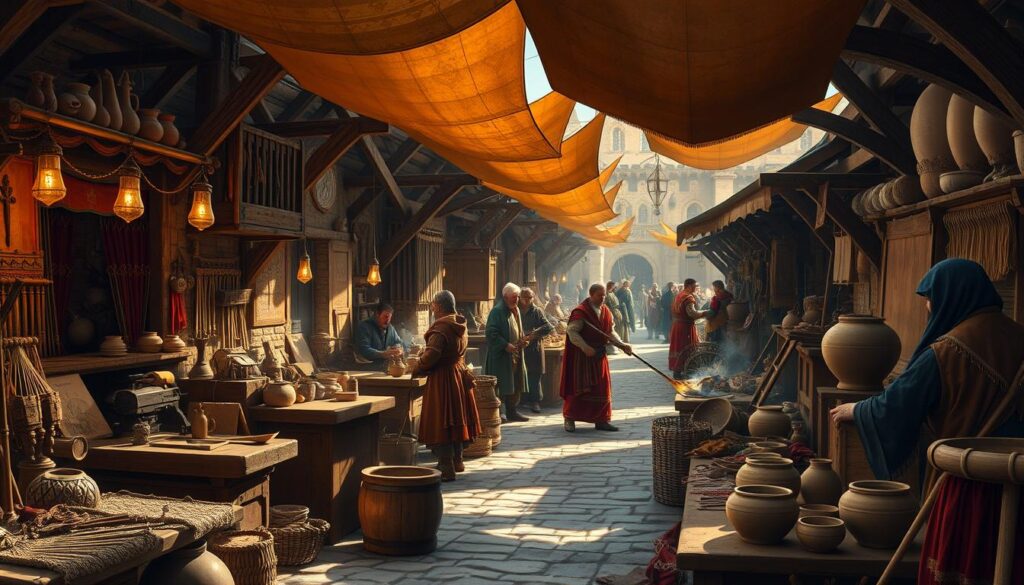
The influence of craft guilds extended far beyond their immediate members, shaping the economic and cultural landscape of medieval Europe. Regions like Florence and Paris became renowned hubs for luxury goods, with the quality assurance provided by guilds playing a crucial role in building consumer trust and brand loyalty.
While the power of guilds waned over time, their legacy continues to be felt in the modern world. The foundations of contemporary trademark laws and quality control measures can be traced back to the innovative practices pioneered by these medieval craft associations, underscoring their enduring impact on the evolution of professional standards and commercial practices.
The Industrial Revolution’s Impact on Traditional Guild Systems
The industrial revolution had a profound impact on traditional guild systems, which had dominated the economic landscape for centuries. As mass production techniques and new technologies emerged, many guild practices became increasingly obsolete. The shift towards factory-based production and the rise of wage labor gradually undermined the guild structure.
This period witnessed the emergence of new forms of labor organization, including the establishment of early trade unions. Workers sought to protect their interests in the changing economic landscape, as the old guild system began to crumble. The formal system of apprenticeships, once managed by craft guilds, also declined during this time.
Guilds, once predominant in medieval Europe, became increasingly outdated as capitalist corporations and trade unions rose to prominence. The apprenticeship system, a hallmark of the guild structure, was gradually replaced by more flexible and accessible training models.
“Following the Industrial Revolution, guilds, once predominant in Medieval Europe, became outdated as capitalist corporations and trade unions rose to prominence.”
The industrial revolution marked a significant shift in the way work was organized, ultimately leading to the demise of the traditional guild system. This transition paved the way for the emergence of modern corporate structures and labor movements that continue to shape the economic landscape today.
| Statistic | Value |
|---|---|
| Guilds reached their peak of power and influence | During the 13th and 14th centuries in Europe and England |
| Around the 18th century, guilds were gradually criticized for | Being resistant to free trade and new technologies |
| Apprentices were typically bound or indentured to a master craftsman for | A period of seven years |
| The decline of the old apprenticeship system in England was most significant | During the last quarter of the 18th century and the early part of the 19th century |
The Birth of Modern Corporate Structures
The evolution of corporate structures can be traced back to the 19th and early 20th centuries. During this pivotal period, key features such as limited liability, separation of ownership and management, and the shareholder model emerged, transforming the landscape of business and commerce.
The incorporation of these innovative structures allowed for the accumulation of capital on an unprecedented scale, enabling large-scale industrial and commercial ventures to flourish. This shift marked a significant departure from the personal relationships that characterized the guild systems, moving towards more formalized employer-employee relationships within the corporate framework.
The corporate formation process was further streamlined and standardized through landmark legislation such as the Limited Liability Act of 1855 and the Companies Act of 1862, which facilitated the incorporation of companies with limited liability and standardized the company formation process.
| Key Milestones in the Evolution of Corporate Structures | Timeline |
|---|---|
| Emergence of the joint stock company, enabling investors to pool resources and share risks | 17th century |
| Introduction of limited liability, separating personal assets from corporate debts | Mid-19th century |
| Establishment of the Dutch East India Company, the first business corporation with permanent capital | 1602 |
| Incorporation of the English East India Company, obtaining permanent capital | 1657 |
The rise of these modern corporate structures paved the way for large-scale industrial and commercial ventures, transforming the global economy and shaping the employment landscape as we know it today.
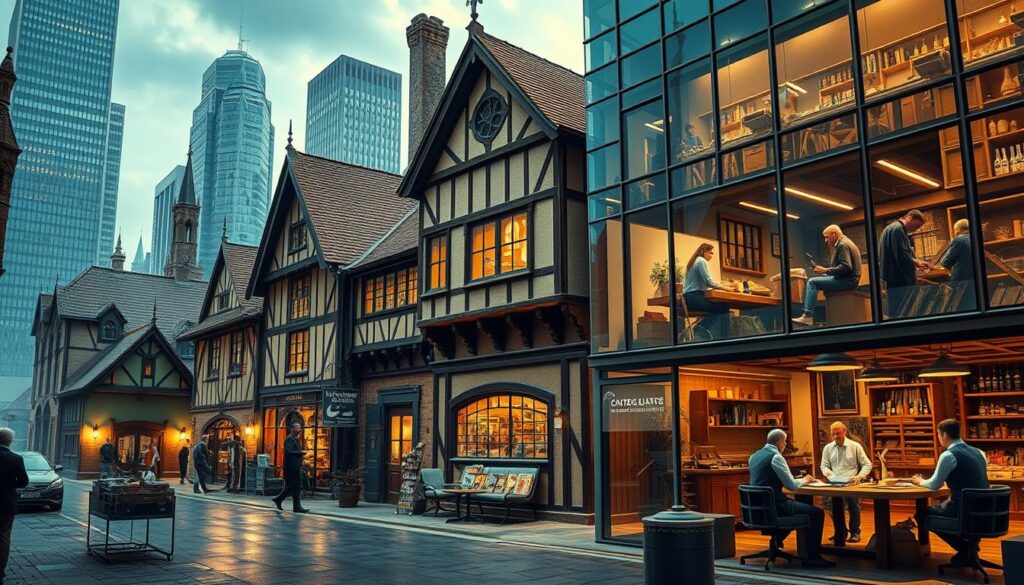
“The emergence of the corporate form was driven by the need to overcome limitations in enforcing long-term commitments of capital, leading to a legal innovation.”
Evolution of Employment Rights and Worker Protection
As corporations replaced the traditional guild system, the need for new employment rights and worker protections became increasingly apparent. This period saw the gradual emergence of labor laws, workplace safety regulations, and the concept of collective bargaining – all of which aimed to safeguard the welfare of workers amidst the changing economic landscape.
One of the earliest examples of labor activism in the United States was the 1824 strike by textile workers in Pawtucket, Rhode Island, who protested a 25% wage cut imposed by mill owners. This event marked the first industrial strike in American history, setting the stage for a growing worker rights movement.
- In 1834, 800 female textile workers in Lowell, Massachusetts went on strike due to a 15% wage reduction.
- Over 2,000 textile workers, mostly children and of Irish descent, went on strike in Paterson, New Jersey in 1835 to reduce their working hours to 12 during the week and 9 on Saturdays.
- The Panic of 1837 saw over 250 failed businesses/merchants in New York and a peak in unemployment, further highlighting the need for worker protections.
Gradually, governments began to respond to these labor issues. In 1840, President Martin Van Buren implemented a 10-hour workday without loss of pay for federal employees working on public projects. This set a precedent for the regulation of working hours and conditions.
The rise of collective bargaining also played a crucial role in the evolution of worker rights. Trade unions emerged as a powerful voice, advocating for improved wages, safer working environments, and reasonable hours. These worker-led movements helped shape the legal and regulatory framework that would govern the modern employment landscape.
The transformation from guilds to corporations necessitated a careful balance between worker welfare and economic efficiency. The gradual development of labor laws, worker rights, and collective bargaining aimed to protect the interests of the workforce while enabling businesses to thrive in the evolving economic landscape.
Modern Corporate Culture and Organization
The corporate landscape has undergone a remarkable transformation, moving away from the rigid hierarchies and structures of the past. Modern corporate culture places a strong emphasis on employee engagement, work-life balance, and corporate social responsibility. Organizations have become more complex, with specialized departments, cross-functional teams, and fluid career paths.
Organizational structure has evolved to foster collaboration, innovation, and agility. Hierarchies have become flatter, with more opportunities for employee autonomy and decision-making. This shift has been driven by the recognition that engaged, empowered employees are crucial for maintaining a competitive edge in today’s dynamic business environment.
Corporate culture has emerged as a critical factor in shaping an organization’s success. Companies that prioritize building a positive, supportive culture tend to see higher levels of employee satisfaction, productivity, and retention. Initiatives such as employee development programs, team-building activities, and flexible work arrangements have become key components of modern corporate culture.
FAQ
What were the key features of medieval guilds?
Medieval guilds were associations of craftsmen or merchants formed for mutual aid and protection. They played a vital role in regulating trades, protecting interests, and ensuring quality of work. Guilds established monopolies, set quality standards, maintained stable prices, and influenced local governments.
How did the transition from guilds to corporations happen?
The transition from guilds to corporations was driven by significant economic and social changes, such as the industrial revolution in the 18th and 19th centuries. This shift led to mass production and new forms of labor organization, weakening the guild system and paving the way for modern corporate structures.
What was the role of merchant guilds in medieval Europe?
Merchant guilds comprised wealthy traders controlling local commerce. They gained significant economic power, controlling distribution and sale of goods, achieving monopolies over local commerce, and dominating town councils to pass legislative measures regulating economic activity.
How did craft guilds maintain professional standards?
Craft guilds operated on a hierarchical structure based on the apprenticeship system, dividing members into masters, journeymen, and apprentices. Guilds set standards for workmanship, regulated pricing, and controlled training, playing a role in technological innovation and the preservation of craft knowledge.
What were the key features of modern corporate structures?
Modern corporate structures emerged in the 19th and early 20th centuries, including features such as limited liability, separation of ownership and management, and the shareholder model. These structures allowed for the accumulation of capital on a scale previously unseen, facilitating large-scale industrial and commercial ventures.
How did the evolution of worker protection shape employment relationships?
The transition to corporate structures necessitated the development of new employment rights and worker protections, such as labor laws, workplace safety regulations, and the concept of collective bargaining. This reflected the changing nature of employment relationships and the need to balance worker welfare with economic efficiency.
How has modern corporate culture and organization evolved?
Contemporary corporations focus on issues such as employee engagement, work-life balance, and corporate social responsibility. Organizational structures have become more complex, with hierarchies, departments, and specialized roles. The concept of corporate culture has emerged as a key factor in business success, influencing employee satisfaction, productivity, and overall company performance.
