
Why Coffee Badging Became a Workplace Trend in 2026
Coffee Badging has rapidly transformed from a quiet office workaround into one of the most defining workplace movements of 2026.
Anúncios
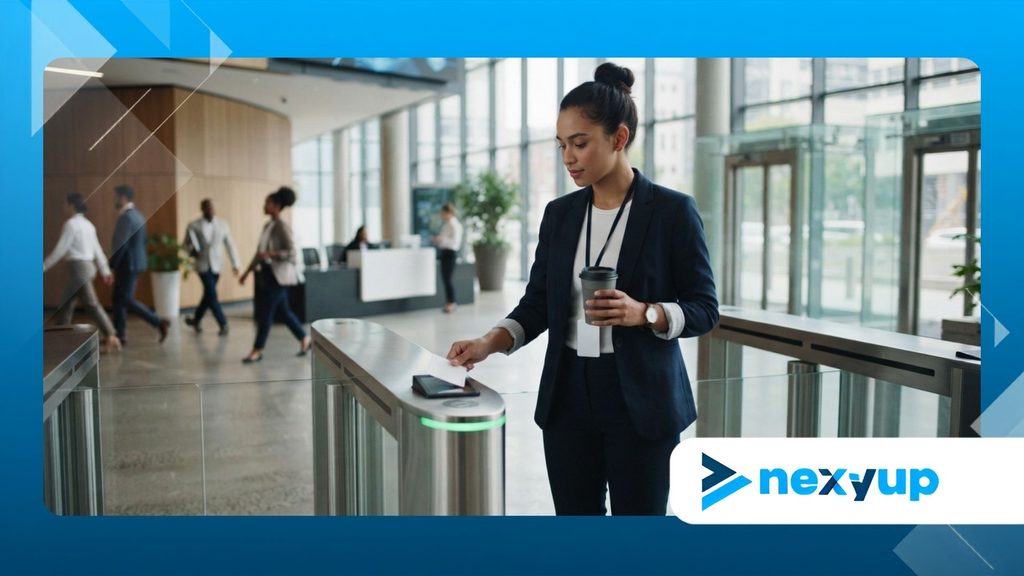
Employees across major global hubs enter corporate headquarters, swipe their official identification badges, grab a cup of coffee, stay just long enough to record physical attendance, and then head straight back home to complete their actual workday in deep focus.
What began as a subtle pushback against rigid corporate office mandates has now matured into an unavoidable cultural shift that executives can no longer afford to ignore or dismiss.
Modern organizations find themselves at a critical crossroads as this hybrid attendance tactic exposes deep friction between top-down policy enforcement and true daily productivity.
Rather than signaling pure employee laziness, this behavioral trend acts as a direct reaction to performative office presence requirements that fail to offer real collaborative value.
Anúncios
As corporate leadership continues to evaluate spatial real estate strategies alongside team output metrics, understanding why workers choose this brief physical check-in provides essential insights into the immediate future of flexible work design.
Key Highlights
- Understanding the Phenomenon: What Coffee Badging actually represents in modern hybrid office culture.
- Core Cultural Drivers: Why workers embrace brief office appearances to balance mandatory mandates with remote focus.
- Corporate & Structural Responses: How organizations track physical presence and adapt flexible policies to restore authentic collaboration.
- Comparative Presence Analysis: A clear data breakdown contrasting rigid mandates against flexible work models.
- Strategic Future Outlook: How leaders can transition from tracking mere badge swipes to measuring true outcome-based value.
What Is the Mechanics Behind This Workplace Trend?
How Did Swipe-and-Go Habits Evolve Recently?
The mechanical shift toward micro-attendance began when corporate return-to-office policies clashed directly with established remote productivity habits.
When organizational leadership introduced strict attendance minimums, staff members adapted by satisfying digital badge logging systems without sacrificing their daily task efficiency.
This survival tactic relies on hitting physical gate compliance while actively reserving intense cognitive work for quiet home environments away from open-office noise.
Corporate infrastructure inadvertently accelerated this operational loop through badge-tracking access control systems that register arrival times without assessing meaningful engagement.
Employees quickly realized that system logging rarely measures continuous desk presence, creating a wide operational gap that allows quick morning check-ins.
Consequently, workers treat physical office entrances as administrative checkpoints rather than functional workspaces, fulfilling baseline compliance expectations while protecting their working day.
Why Are Workers Choosing Brief Office Check-Ins?
Employees prioritize quick office check-ins primarily because open-plan floors frequently generate constant noise, unwanted interruptions, and counterproductive commuting times.
Spending hours in transit simply to sit on video calls with remote teammates feels entirely irrational to high-performing knowledge professionals.
By showing their faces briefly during peak morning hours, individuals protect their professional standing while reserving core analytical work for distraction-free home setups.
Furthermore, this practice acts as a psychological defense mechanism against visual management and performative attendance pressures.
Workers desire the social validation of visible office presence without enduring the productivity tax imposed by noisy cubicles.
The strategy allows individuals to maintain professional visibility, grab a morning beverage with colleagues, and preserve their personal energy for meaningful project output.
++ The Most Unusual Employee Benefits Companies Are Offering Today
What Role Do Corporate Mandates Play in This Habit?
Strict top-down mandates that lack clear operational rationale inevitably trigger creative employee compliance mechanisms.
When executive leadership enforces mandatory badge swipes without explaining how physical presence improves outcomes, staff members view the policy as pure micromanagement.
The practice of Coffee Badging emerges directly when organizational rules value physical presence over actual creative yield.
Corporate policies that treat physical attendance as a primary performance key metric naturally encourage performative behaviors among staff.
When workers realize that badge records dictate career advancement or annual reviews, they optimize for the metric itself rather than the underlying intent.
This disconnect forces employees to gaming access control systems simply to protect their autonomy and maintain workload momentum.
Why Is This Movement Gaining Ground in 2026?
How Does Performative Presence Impact Daily Output?
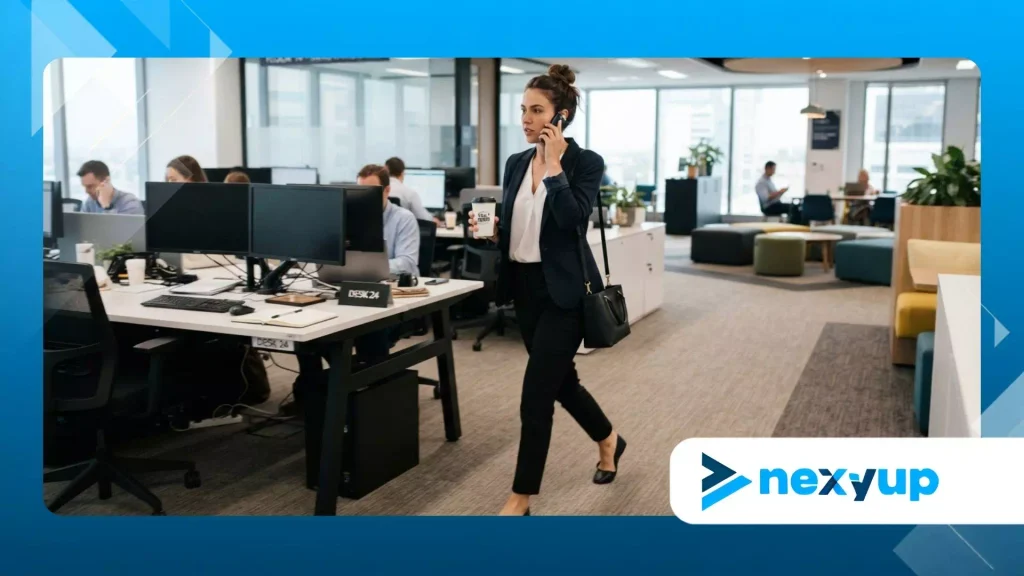
Performative presence actively drains mental energy by forcing employees to display busyness rather than delivering actual project results.
Spending three hours daily commuting and navigating office chatter leaves knowledge workers drained, forcing them to finish critical tasks late at night.
The realization that physical presence often reduces output fuels widespread dissatisfaction with rigid attendance enforcement.
According to global workplace research conducted by Owl Labs in their State of Hybrid Work report, 58% of hybrid workers admitted to participating in brief office check-ins specifically to satisfy presence tracking without sacrificing daily productivity.
This empirical data highlights a massive structural gap between corporate physical monitoring and true employee engagement.
When administrative metrics override real deliverables, workforce efficiency drops significantly across key departments.
Also read: The Science Behind Curiosity-Driven Careers
Why Is Autonomy Becoming non-Negotiable for Staff?
Modern professionals view operational autonomy as an essential component of total compensation and overall job satisfaction.
Having experienced high autonomy during remote periods, employees resist returning to arbitrary schedules that dictate exactly where sitting must occur.
Autonomy grants individuals the agency to match specific tasks with optimal environments, driving both speed and quality.
When corporate policies restrict flexibility, high-performing individuals actively seek workarounds to protect their personal effectiveness and work-life balance.
Micro-visitation offers a middle path, allowing staff to acknowledge corporate policy without handing over complete control of their daily focus hours.
Companies that fail to respect worker agency face quiet resistance, elevated turnover, and declining morale.
Read more: How Uncommon Career Experiments Reduce Long-Term Risk
What Is the Financial Cost of Distracted Office Days?
Forcing employees into bustling open-plan offices for solo deep-focused work generates massive hidden financial losses through continuous task switching.
Every unwanted interruption requires nearly twenty-three minutes for a worker to regain full cognitive focus on complex coding, writing, or analysis.
Multiplying these focus gaps across large teams reveals thousands of lost productive hours every single quarter.
Additionally, long daily commutes contribute directly to employee fatigue, elevated stress levels, and higher burnout rates across critical departments.
When staff members waste prime energy navigating traffic only to process emails in a noisy room, business operations suffer silently.
Smart organizations realize that forcing physical presence for solo work actively destroys economic value and operational agility.
How Can Organizations Adapt to Modern Hybrid Needs?
How Are Leaders Reframing Office Attendance Metrics?
Forward-thinking executive teams are actively replacing rigid badge-swipe tracking with clear outcome-based performance metrics.
Rather than monitoring physical gate entries, managers evaluate project milestones, client deliverables, and overall team output. Shifted focus removes the incentive for empty presence tactics, establishing trust as the baseline operational currency.
Leadership teams are also redesigning physical office layouts to support intentional group interaction rather than solo task execution.
By converting endless cubicle rows into collaborative workshops, lounges, and meeting zones, physical spaces gain a clear purpose.
When coming to the office offers genuine social and creative value, employees stay voluntarily without needing policy enforcement.
Why Is Intentional Gathering Replacing Fixed Days?
Intentional gathering focuses on bringing teams together for specific high-value activities like strategic planning, team bonding, or project kickoffs.
Rather than demanding three random mandatory days every week, organizations schedule dedicated team alignment days once or twice per month.
This intentional structure ensures that office time delivers distinct collaborative benefits that cannot be replicated remotely.
When employees understand the specific purpose behind an in-person gathering, resistance disappears and engagement rises sharply.
Staff members willingly commute when the day features meaningful brainstorming, group problem-solving, or social connections. Intentionality transforms the physical office from an administrative prison into a valuable resource for creative synergy.
What Tools Help Balance Flexibility and Accountability?
Modern enterprises deploy asynchronous communication platforms, project dashboards, and clear documentation standards to maintain operational alignment without physical surveillance.
Visual project management tools provide complete transparency into task progression, making physical attendance checks entirely redundant. When project status is visible in real time, managers no longer rely on physical desk presence to gauge effort.
Furthermore, dynamic space reservation software helps companies optimize corporate real estate footprints while supporting flexible employee arrivals.
Teams reserve collaborative rooms precisely when group work is required, leaving real estate usage flexible and cost-effective.
Combining smart software with clear cultural guidelines establishes a balanced environment where flexibility and accountability thrive together.
Comparative Analysis of Presence Strategies
| Strategy Dimension | Traditional Rigid Mandates | Coffee Badging Approach | Intentional Hybrid Model |
| Primary Metric | Badge swipes & desk hours | Minimal gate compliance | Project outcomes & milestones |
| Employee Sentiment | High frustration & burnout | Guarded balance & micro-defiance | High trust & strong autonomy |
| Space Utilization | Underutilized static desks | Sudden morning traffic spikes | Purpose-driven dynamic zones |
| Productivity Impact | Fragmented by open noise | Protected through home focus | Optimized by task-environment fit |
| Retention Risk | High risk of staff turnover | Moderate risk of quiet quitting | Strong retention & loyalty |
Transforming Office Spaces Into Intentional Value Hubs
Transitioning away from performative attendance requires organizational leadership to completely re-evaluate the core purpose of physical corporate infrastructure.
When companies treat the office as an intentional collaboration engine rather than a tracking center, the necessity for artificial compliance vanishes.
Modern professionals willingly enter shared spaces when the environment offers tangible benefits, professional connection, and rich collaborative experiences that remote settings struggle to deliver.
Ultimately, solving attendance friction demands open dialogue, mutual trust, and a willingness to adjust outdated operational models.
Organizations that listen to employee signals and build flexible frameworks around outcome-based accountability will capture superior talent and drive sustained operational excellence.
The future of workplace culture belongs to organizations that value genuine human output over superficial badge swipes, transforming offices into vibrant hubs of authentic innovation.
Share your experience in the comments below about how your workplace handles flexible attendance strategies!
Frequently Asked Questions
What does the term Coffee Badging specifically mean in modern work culture?
The term describes an employee practice where a worker physically swipes their access badge at the corporate office entrance, grabs a coffee or greets colleagues briefly, and leaves shortly after to complete their work day from home.
It allows staff to satisfy automated physical attendance monitoring systems while completing actual deep-focused work in a quiet environment.
Is this practice considered a fireable offense or policy violation?
It depends heavily on specific company policy and contract terms.
While some strict organizations view brief visits as a breach of return-to-office mandates, many flexible companies view it as a harmless compromise or a clear signal that current office policies require revision toward outcome-based metrics.
How can employers detect if staff members are doing this?
Employers typically identify this pattern by comparing gate entrance badge logs with internal Wi-Fi network connection durations or IP address logs.
However, relying heavily on digital surveillance often damages employee trust, leading many progressive organizations to focus on outcome metrics instead.
Does this trend indicate low employee engagement or laziness?
No, research shows that most employees using this tactic are highly motivated individuals protecting their daily output.
They choose to leave noisy open-plan offices specifically to avoid constant distractions, working longer and with deeper focus from home.
How can companies eliminate the need for artificial office check-ins?
Companies can eliminate performative presence by abolishing arbitrary badge-swipe tracking, setting clear outcome-driven objectives, and establishing intentional team gathering days focused purely on collaboration rather than solo computer work.
